Showing posts with label On.... Show all posts

16 September 2013

On Knowledge

"The whole universe interests me." ~George Brecht

Today's topic is knowledge, whether it's gained for the sake of gaining, or worth pursuing.

I use the phrase "an infinite mind" a lot. Not simply related to the title of this blog, but in conversation I might use it. I use it to describe myself, to describe people who lived their lives out in pursuit of knowledge. da Vinci had an infinite mind. Albert Einstein had an infinite mind. John Dalton had an infinite mind. There are many others. I revere these people simply because they went and discovered more. All discovery is not good - Robert Oppenheimer comes to mind. But yet it made the world a more curious, smarter place.

In case you haven't read the nineteen columns I've posted since January on topics, I enjoy knowledge.   Sure, I go and trivialize it and call it "trivia". It might be. It isn't exactly relevant to your life the way, say, how iOS works for your iPad or whatever. But I enjoy studying about this stuff.

Knowledge is important because I've always wanted to learn, stretch out my arms farther and reach the next level in education, in self-advancement. At age 3 I knew to read. By 4 I knew all the US Presidents, their VPs and terms. By 5 I knew the countries of the world. Don't call me a prodigy. What I was was merely curious.

People need to go out and discover things. Not simply because it'll be relevant to your life. Many people say that everything is relevant to life. The Amber Room, the VOC, Gorm the Old, Captain Cook aren't always relevant to life. But yet you'll be a bit smarter. You'll be aware of the amazing diversity and aptitude the world has in terms of knowledge. "Ipsa scientia potestas est"- knowledge itself is power. ~Francis Bacon

My ideal life is as such: study all the available branches of knowledge in university, in particular world literature, psychology, art fundamentals, philosophy and calculus. Learn 5 additional languages. Travel to every single country in the world. Partake in a ritual for each religion. Learn to play 2 musical instruments. Read classical literature. There is much, much more.

Of course, I will never accomplish all of the above. It is very possible. But it is also very nearly impossible.

What, then, is there to do? Learn. There is the Internet. There are books and print media. There are many resources out there. We simply don't know how to use them. Modern society likes lolcats and duck faces more than self-improvement. "Thank God for books and music and things I can think about!" ~Charlie Gordon

I am horrible at math. Equations make sense to me, yet when I sit down to work on my pre-calc homework, my mind is more often than not a blank. (OK, not that often, but there are many times.) Yet I opted to take Precalculus/Calculus 1 this year instead of Trig/Precalculus. Why? Why would I go to a harder math class when I struggle? For the challenge. Calculus fascinates me. Calculus makes our cars run, our aeroplanes fly, our bank accounts work, our computers process. I wish to learn how exactly calculus ties all the branches of mathematics together. It will be a struggle, mostly uphill. Yet I wish to learn.

As TE White says in his book The Sword in the Stone, 

“The best thing for being sad," replied Merlin, beginning to puff and blow, "is to learn something. That's the only thing that never fails. You may grow old and trembling in your anatomies, you may lie awake at night listening to the disorder of your veins, you may miss your only love, you may see the world about you devastated by evil lunatics, or know your honour trampled in the sewers of baser minds. There is only one thing for it then — to learn. Learn why the world wags and what wags it. That is the only thing which the mind can never exhaust, never alienate, never be tortured by, never fear or distrust, and never dream of regretting. Learning is the only thing for you. Look what a lot of things there are to learn.” 

I think we should all live by those words, don't you think? There is so much out there. "There are so many doors to open. I am impatient to begin." 

-Rob

19 August 2013

On History (Or, Lessons That You Could Learn From The Past)

I just finished reading a world history book. Re-reading's a better term; I've had this book for more than two years.

For anyone interested in a fun, easy read about world history, it's called A Little History of the World, by Ernst Gombrich. (Note: it's Eurocentric, which I'll discuss below, and somewhat childish. It was written for kids to understand, but it's still very mature and readable.)

History is largely scorned and forgotten about in modern society. Ask any 15-year-old who ruled France after the Monarchy, and you will likely get one of these three responses:

a) Huh? I dunno.
b) Napoleon, I'm pretty sure.
c) Which time?

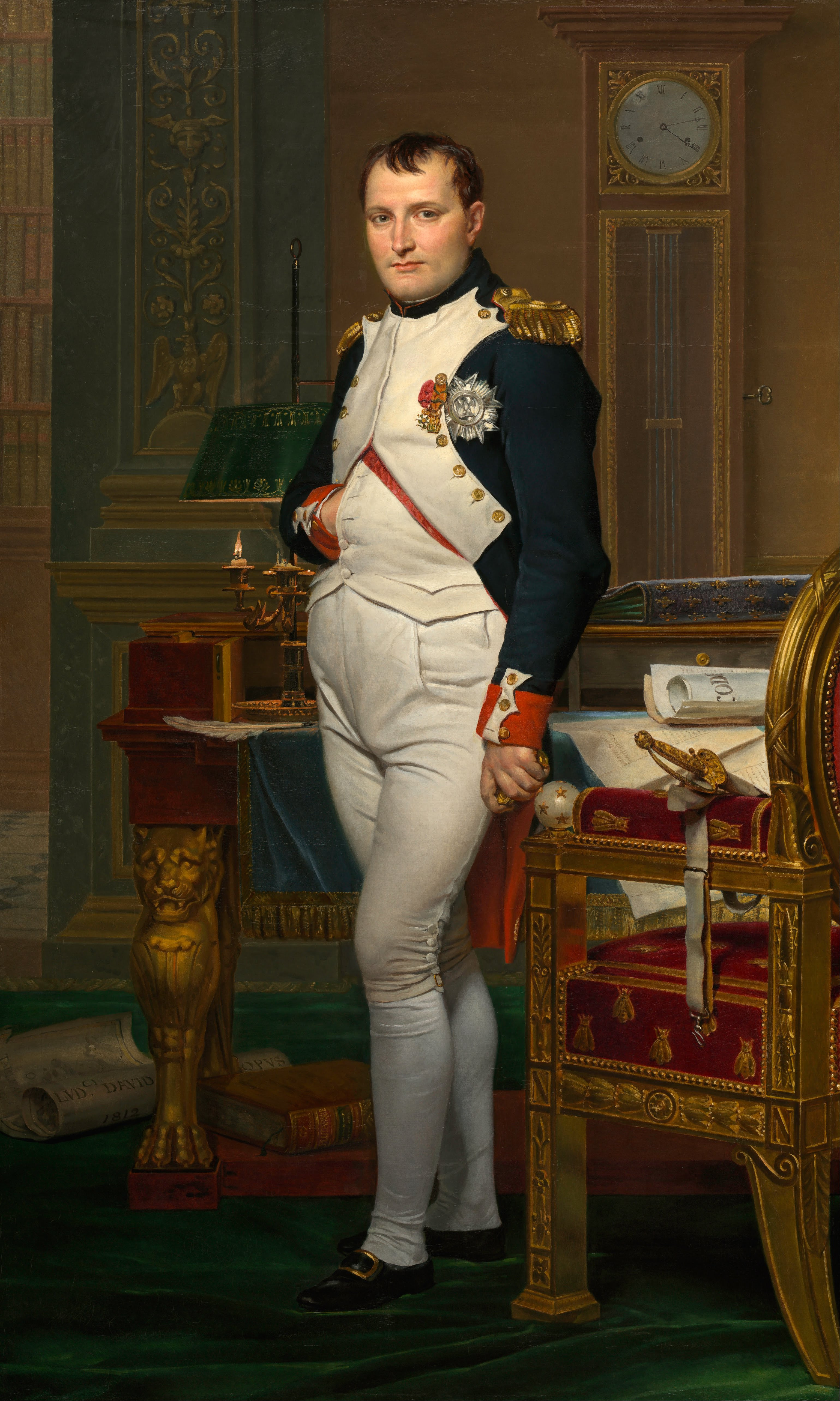
Napoleon gets a bad rap, imo.
Photo Credit: Wikipedia
The first response is most likely to be heard. The second is also sort of common, if you're talking to a reasonably intellectual person who knows history in degrees, and should be commended. And the third response (which res ipsa loquitur, I would totally respond with) is actually the most correct. The monarchy was replaced twice. Three times, if you count the Hundred Days of Napoleon.

History can be very useful. Extremely. George Bernard Shaw once said,
We learn from history that we learn nothing from history.
Overreacting? But Shaw was right. Many, many times, over the course of human history, whether it was Romulus Augustulus losing the Roman Empire, to Napoleon reinstalling the aspects of the ancien regime, to the VOC bringing themselves to their knees with corruption for the third time, to Hitler plunging Germany into another war, to anything repetitive and useless: we have done it before, and if it hasn't, it will be done again.

It's important to learn about history for these reasons. True, it's unlikely that you'll start a world war or give up the world's most powerful empire, but think about your own history. If you promised yourself you'd stay up to study once and just started getting distracted, and you have to study tonight, you might want to not be distracted. Just a vague way of explaining.

You should take the time and effort to pay attention in your history class or to read a history book. History can be very interesting if you learn about it the right way. You can do this a number of ways. The one that will get you most through your history class is to lose your sense of knowing. Let me explain.

Imagine you're a Dutch sailor with, let's say, the VOC. (See here if you don't know what it is or you've forgotten.) The year is 1645 and the New World awaits. You've always wanted to go visit the colonies along there, including New Amsterdam! Imagine what it must be like. If you've ever been on a boat or even a plane, imagine seeing a new place for the first time from far off. Imagine the new people you'll meet: Native Americans, merchants, Pilgrims and Puritans, and even some of your "fellow sailors". I find that usually works.

Not all of history is fun though. Even I have to concede that. There are parts of history that I will barely discuss or mention or not even study, maybe, because I find it boring. (case in point: The Catholic Church, the Byzantine Empire, Ancient Greece, and the Incas.) Those are my boring spots: everything else I'm eager to learn. But even if you bear a hatred to all types of history, you should still try to at least learn one thing about it. You'll seem smarter, you'll be a better person because of it because you'll learn how something somewhere affected someone, and humans in general have done some pretty crazy things.

Take the Amber Room, my most recent Triviality column. Could you ever have imagined a whole room a quarter the size of a football field covered in amber? It's amazing even to me and I've spent a lot of time researching it and knowing it as such.

History is not without its weak points. It's biased. Remarkably. That's a history student's job - to cover everything equally. From the 1500s to about 1950, Europe ruled the world in empires and monarchies. As a result, we have classes that only cover Europe. We have textbooks that cover the British monarchy in 3 chapters and only a paragraph is devoted to slavery in Africa, or what-have-you. It's important to look beyond the historical bias and look at the larger picture. (I'm slightly to blame - I've devoted columns to Dutch empires, Danish kings and Spanish colonial systems. I am making it my job to discuss other aspects of history.) But we are getting better, which equality in all aspects of society, which is just awesome! It's pretty amazing, when you see how everything can work out together. There will be always be shining moments in history, even in the darkest of moments.

What's your favorite part about history?

-Rob

08 July 2013

On Writers and Writing

Writers. Who needs them? Aren't they just a bunch of disillusioned, alcoholic maniacs who spend their whole lives writing about social issues and stuff that I have to actually write about in English class? Meh, so boring. I hate writers. I'm glad they mostly die before the age of 50. Thank God. Imagine what else they could write.

Why, indeed? People read today - it may be erotica or dystopia or trashy young adult romance, but it's still reading! Wrong. People need to read classic styles, not just what's popular today. There are some good books, but it's best to read stuff that people wrote before 1960, in point of fact. I'll get back to this.

I know a lot of people who hate writing. That's their opinion, they're entitled to it. But reading can be fun. In fact, I know a lot of people who love writing (and reading, by extension). I've always loved reading and writing. I learned to read when I was 3. Not many people can do that. But I digress.

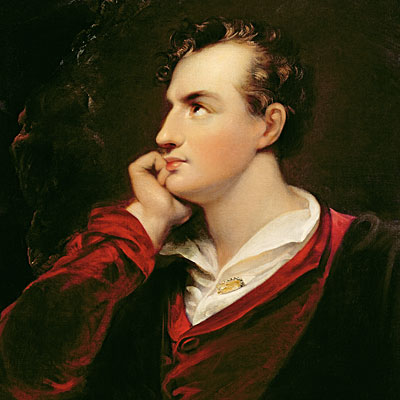
Doesn't he just look dramatic?
My favorite writers are those who could speak eloquently and yet tell a story. I'm a Romantic view, remember, with a slight touch of Realism. (See here for my previous article on those two). People who could write a story, encapsulate it with wit and all this quotable stuff, and yet be original. Edgar Allan Poe, a great example. Mary Shelley and Lord Byron, also great examples. And of course F. Scott Fitzgerald, and finally, the best one of them all: Oscar Wilde.

(Get to the point, random blogger! You're losing my attention!)

Fine. My point is this: you don't have to hate on writing because you think it's hard. I know lots of people who find it hard to read or write. Not because they can't - but because they don't understand the importance.

The importance is this. Love it or hate it, the world needs writers. They may be modern-day hipsters who sit at Starbucks all day with their laptops and Moleskine notebooks (hides) or they can be really successful people who sit behind a desk. Like JK Rowling. But why?

People need to tell their emotions and thoughts. People express this in different ways. Some like to deal it out on the football field. Some people need to write a song and perform it. Some people need to just blurt it out to strangers. And some write it.

We write because we want others to know our emotions, thoughts and to tell a story. At least, that's what I write for. There may be another reason, but generally most writers seem to do that.

Our schooling system knows the importance of writing in society. But we go about it entirely wrong. Lots of kids could love writing if only the state made it that way. Instead we're forced to write "expository essays on the economic principles of Europe" or "text-to-self generalizations" and whatnot. That will get you nowhere. Really. It'll help in future - with college, definitely - and maybe with a job. But it's BORING. And the sad part is that what kids really want to write about - fantasy, their own made-up stories - isn't covered. We need more creative writing classes.

That's how I started out. I loved reading, but never really writing - it was usually expository what I was subjected to. But two years ago I was required to make up my own story. I hadn't before. I tried it - it was fun! Since then I have loved writing, written two novels, and a bunch of short stories and poems. That's what sparked my interest.

So if you want to know what writing's all about, then just take a topic - anything random and from your mind - and just write about it. You can write off the top of your head (stream of consciousness) or write a full, flowing narrative. It won't hurt, and maybe it'll change your attitude.

(But wait, random internet kid, why do we have to read other people's books that are boring and full of ****?)

It kind of has to do with above. It helps you gain perspective into the world. What people think, at different times, and et cetera. I kind of dealt with this with Shakespeare a couple weeks ago - and it applies here. I know, I know, I hate when books mean one thing and today we don't get it (look at the Bronte sisters, they wrote "comedies of manners" which aren't really comedies today.) But reading helps you see different styles, how to think differently, etc. You become smarter, and it's fun.

One last point: you may hate how some writers write. I know I do. I hate stream-of-consciousness (except, oddly enough, for Catcher in the Rye) and Hemingway's modernist style. That's my opinion. You might like it. But it's still worth reading. At least one book. You can gain some perspective, and if you want to write, you learn HOW NOT TO WRITE THAT WAY! *smiles* But if your teacher makes you spend a whole year reading a type of book you don't like, you might wanna suggest a different style to her/him. Say you want to be more well-rounded with books.

I hope that helps anyone who's confused with writing and reading and why they're so important.

-Rob

06 July 2013

On Photographs and People

I like photographs. I'm not much of a photographer (or a filmmaker, either, I tried once. go see Screenriffs if you want an epic blog about filming) but I like just seeing them. I'm not like my grandmother who has to take at least 5 pictures every time we see her, but it's great to at least keep some pictures of what you're doing. Examples include the Renaissance Faire, and that's it. *sighs* I live a very boring life...

Last night I was looking at several pictures from 2009. That's four years ago. I was a child four years ago. I still am, if you want to get technical, but I'm 15, so that's beside the point. I was way younger, and fatter, and a lot more weird-looking. (Actually I'm more weird looking now.)

But besides from time elapsing, there's one thing about pictures that really makes me wonder. Random people.

There is a picture of me and my parents and godparents shortly after my baptism. I was one, I believe. The picture would have been normal, everyone was smiling, it was in the church which made it official looking - except for the fact that completely randomly, not three feet away from my mom, the leftmost of the people in the picture, there's a little girl, probably around four or five, turning to walk.

It wasn't like the girl wanted to be in the picture and was posing. She likely was trying to get out of the way but the picture caught her in its timeless embrace of color and endless solidarity. In any case, it makes for a rather bizarre picture, namely because whoever took the pictures on June 26th, 1999 didn't feel like taking one without the girl. Or they just didn't notice till it was too late. We'll never know. And my parents can't identify her, she was probably part of some other family.

So I hope you see what I'm trying to get at here. Random people in photographs make me wonder, and get me very interested in them. Not like in a creepy way, but just who they are, and how they happened to drop into my life and photographs, for the briefest of moments, and then leave, never to be seen again.

The most common place for random outsiders to show up in photos are in theme parks. County fair, Disneyland, Six Flags. All are good examples, but usually a lot of people show up, dispelling the mystery. It's more mysterious if it's just one person, preferably walking close by, with their face distinguishable from shadow. You're probably like, "who is this nutjob trying to look at random people?" I promise I'm not, it's just mystery. I like mystery.

I'd show examples right now but I can't find any. Go figure. Coincidence? I think not.

-Rob

08 June 2013

A Quote Worth Reflecting On

From Cyrano de Bergerac  (movie and play):

DE GUICHE: (recovering his self-control after being insulted by Cyrano) Have you read Don Quixote?
CYRANO: I have - and found myself the hero.
DE GUICHE: Be so good as to read once more the chapter of the windmills.
CYRANO: Chapter Thirteen!
DE GUICHE: Windmills, remember, if you fight with them -
CYRANO: My enemies change, then, with every wind?
DE GUICHE: - they may swing round their huge arms and cast you down into the mire!
CYRANO: Or up - among the stars!


I read this play back in December and was immediately taken with. I can identify with Cyrano in so many ways. Perhaps I've never written love poems under the guise of a friend to a girl I've loved, but I can see myself being Cyrano.

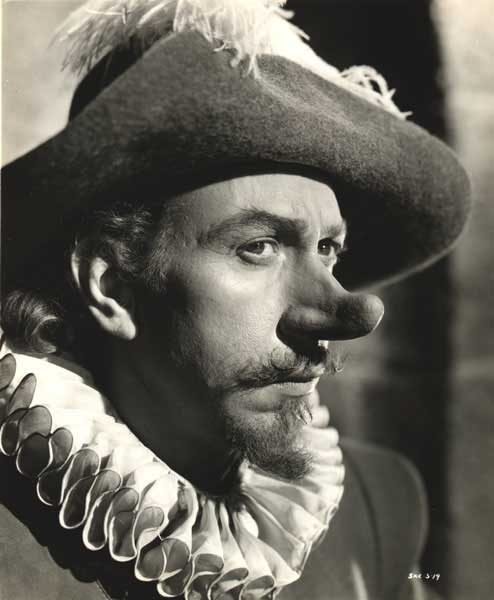
You've got a little something
on your face there... *runs*
The above quote is very interesting. It shows Cyrano's "insolence" to deGuiche, the Duke in the play, or Count at the least (why is it French noblemen are always evil?) but it shows hope and inspiring.

de Guiche assumes that Cyrano will meet his match one day but Cyrano remains optimistic he won't. Oddly enough, both happen to him.

Cyrano meets his match (assumed to be one of his enemies, who drops wood on his head) but yet ends up "amongst the stars" (i.e. the exalted Roxane's arms, who knows finally that he loved her).

Just something to think about. I'll talk more about Quixote (or Quixada) one day -- the book's hilarious and worth discussing.

And I recommend that anyone interested in a short, quick read (took me an hour) and wants some swashbuckling, dramatic hammy action, wit and wisdom, and sad melodrama, read Cyrano. Here's the free eBook, courtesy of Gutenberg: http://www.gutenberg.org/files/1254/1254-h/1254-h.htm

-Rob

(Blog Note: I originally had this post replaced with the opening prologue of a story I'm working on. To view it, go to the pages bar right above this post, and click on "The Monologue", the last tab.)

27 May 2013

Romanticism vs. Realism

"The nineteenth-century dislike of Realism is the rage of Caliban, seeing his own face in a glass.
The nineteenth century dislike of Romanticism is the rage of Caliban not seeing his own face in a glass."

~Oscar Wilde, The Picture of Dorian Gray

 That being said, Romanticism and Realism are two interesting, opposing sides of a philosophical movement that the poets/artists/writers in the 1800s were obsessed with.

For the first half of the century, art was mostly leaning toward the Romantic movement, that is, a "romantic" idea of heroes and the human race being something infallible and amazing, dramatic and powerful. Don Juan with the Byronic hero, Frankenstein with the mistrust of synthetic humans, etc. clearly show this.

In contrast, Realism was the exact opposite. In the second half of the century, the American Civil War and other wars, coupled with the Industrial Revolution, began to show people the horrors and normalcy of life, so books were more "real" and focused on real situations. Huck Finn is a great example of this. But there are others.

Of course, Oscar Wilde above was saying that the opposing forces could never be accepted. In The Tempest, Caliban was a character who looked into a mirror and wanted to see himself powerful and handsome (think Mirror, Mirror, on the wall....). He didn't so he got into a rage.

If you stare at yourself in the mirror, and expect to see someone powerful, handsome and intelligent, and you don't, will you get angry? But if you see yourself as who you are, ordinary and ephemeral, will you get angry? Same principle. The Romantics expect to see someone powerful and dramatic, and fail to. The Realists wish to see themselves for who they are, and fail. None are satisfied.

That makes for interesting thoughts and an epic quote. Something to think about.

Of course, there are some that say that the only people who really cared about this were the elite rich class, so it shouldn't matter. But it's still interesting.

What are you -- a Romantic or Realist?

-Rob