Showing posts with label Top Tens. Show all posts

20 June 2013

10 Greatest Pieces of Classical Music

I really haven't talked as much about classical music as I should - mainly because due to my new obsession with Pandora I haven't listened to it as much as I should. I think the only time I have discussed music was that one time with instrumentals. That was a soundtrack, though.

Nonetheless, classical music is wonderful and really does have a hidden side to it. (note: it really should be called art music. But art music is really more vague and is used to describe music that has large amounts of theory and composing behind it. Read the Wiki here.)

Most people, when confronted with classical music, sadly either don't understand it or immediately assume it's Mozart/Beethoven. While Mozart and Beethoven are wonderful composers, I do feel they are extremely trite and overused (many will agree with me, I'm sure), especially Driss from The Intouchables:

Driss: (after hearing Vivaldi's Spring) I know this piece! It's on the telephone when you call the offices! You are number 600 in line. Please hold! Waiting time: 2 years! :)

'You're right, Philippe - Bach is cool!' 'Not as cool as Earth,
Wind and Fire, Driss...'
So, my main goal today is to pick 10 of my personal favorite pieces of classical music and hopefully inspire readers to listen to those pieces, and go out and experience life with this new type of music.

My love of classical music actually came with a boxed set I received for Christmas when I was 5. 10 CDs, one for each composer. I only have about 3 of the CDs now, but I remember the order that all of them were in. Mozart, Bach (the second), Beethoven, Strauss, Wagner, Tchaikovsky, Vivaldi, Chopin, Schubert and Verdi.

Now, the rules of the list are simple: 10 pieces, no Mozart/Beethoven (sorry, but my goal is to broaden your horizons :D ) and I only have one piece that was actually used in a film. The rest are relatively little-known or known, just not really listened to. One per composer, except for the top 2 which are by the same composer. Youtube links to the piece are there.


10. Franz Schubert - Fischerweise
This is actually a song, and if you know German, good for you! If not, I advise you to learn German. I certainly want to. But the song title means "fisherman". And it's catchy. :)

9. Hector Berlioz - Symphonie Fantastique, Op. 14 
A lot of people haven't heard this work which makes me sad. The very beginning with the harp makes everything seem ethereal and sets up the tone for the "fantastique" mood this work brings.
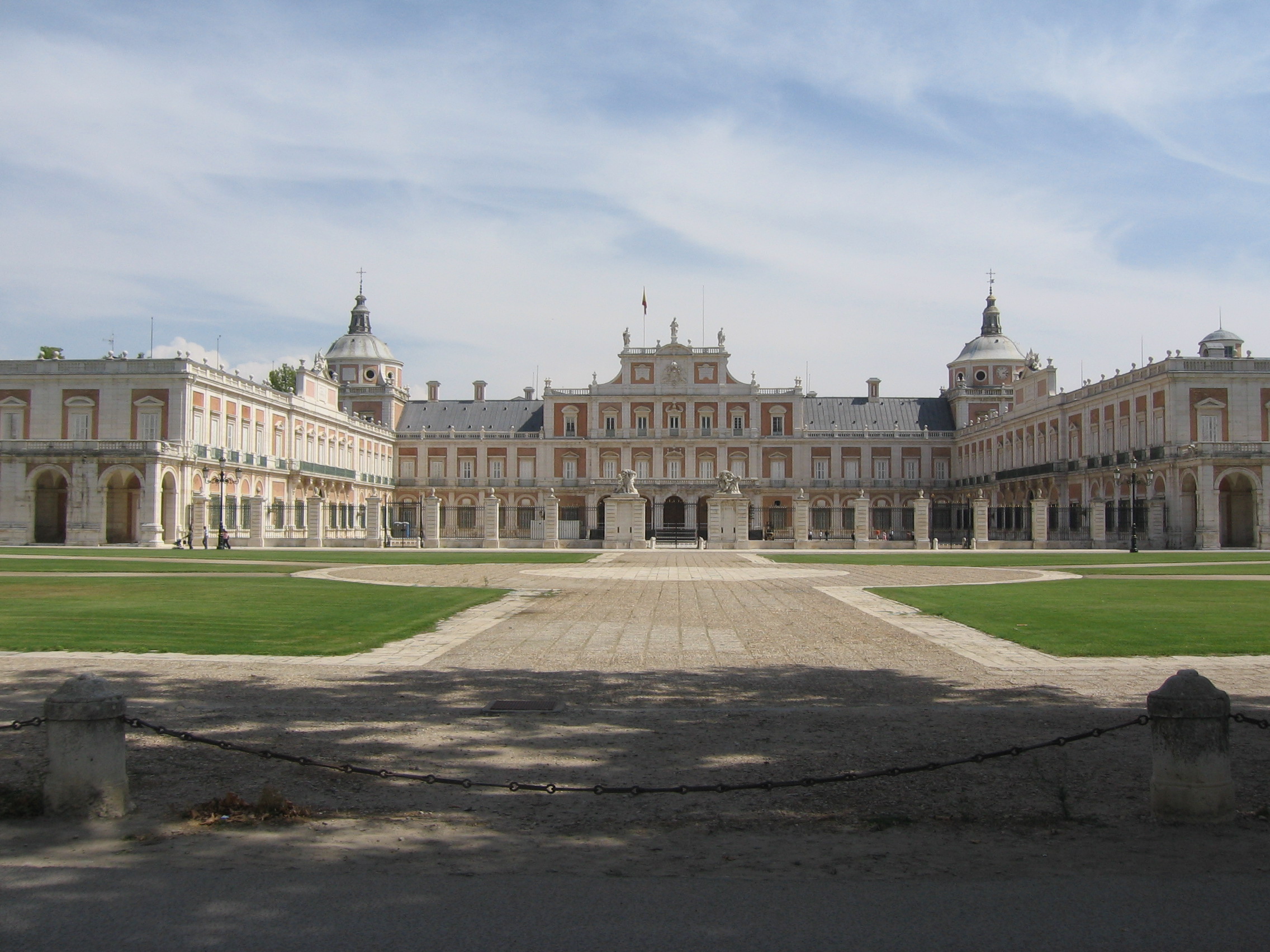
Imagine not being able to see this...
8. Joaquin Rodrigo - Concerto de Aranjuez Adagio
When people think of classical music everyone usually thinks of Germany or Austria and Hungary or that Central Europe area. Even Italy and France, somewhat. But no one really thinks of Spain. And Spain has many wonderful composers, such as the blind Joaquin Rodrigo, who came up with this beautiful piece, for a palace and gardens he could not see (to the left). No wonder he was made a honorary noble for composing the work. (By the way, it's pronounced ah-rahn-hes. Not hoo-es, or worse, joo-es.)

7. Dmitri Shostakovich - Waltz No. 2 
This one can be heard in lots of tunes as a sort of motif (repeating piece) but I like it. It's slow (usually I like very fast and dramatic pieces) but it seems dramatic in its own way. I can picture kings and queens dancing to this in a dark palace, or something.

6. Johann Strauss - The Gypsy Baron Einzugsmarsch
Ah, yes! Der Ziegeunerbaron, or the Gypsy Baron. Used in a minor opera by Strauss, it is a very happy and dramatic piece. Einzugsmarsch means the Opening March, which makes sense. It's just so happy and powerful...especially the end. There's this quality that reminds me of the Blue Danube, which Strauss also did.

Certainly looks dramatic,
doesn't he?
5. Richard Wagner - Liebestod 
Ah, Richard Wagner. One of the most misunderstood, understood, loved and hated composers of all time. In his day, you either loved him or bitterly hated him (and sided with Brahms). Even Oscar Wilde commented on his work, saying it was "so loud one can talk without one being overheard". His epic work, Der Ring des Nibelungen is made up of 4 operas and runs for 15 hours. It's very powerful and dramatic as you can imagine (again, learn German to understand!) But this piece, Liebestod, is a sadder work from his earlier opera Tristan und Isolde, which is another love story like R+J. Starts off slowly, and ends slowly...representing the sadness of the whole ordeal. (And for the record, I would just like to say that I am not a Nationalist or anything by liking Wagner. I understand he is controversial due to his anti-semitism, but I only love the music. Is anything really wrong with that?)


4. Sergei Rachmaninoff - Rhapsody on a Theme of Paganini A Minor

This piece is very soft and simple. The best part is when the piano echos dramatically. I heard this piece some 4 years ago, and since them it has haunted me. Haunted in a good way. It's ethereal and all.

3. Gustav Mahler - Quartet for Piano and Strings in A Minor
This piece is so...sad...like me not winning an Oscar...

You may have heard this on Shutter Island (damn good movie, by the way - probably my second favorite after Rain Man) and it perfectly makes the atmosphere of the island come alive. Especially since it's gloomy, dark - and this piece reflects that. Mahler wrote it when he was 16. If that isn't amazing, I don't know what is.


2. Gustav Mahler - Symphony No. 6 in A minor
I first listened to this last week, which inspired the blog post, although I barely am getting to it now. And, you may ask, why is it number 2? Because it's the piece I've been waiting for. I feel it's an embodiment of my spirit. Dramatic opening, envisioning someone walking down dark castle stairs into a prison, flanked by a lone guard. The doors open and the person enters to interrogate someone. Once he leaves, he enters the main hall of the castle. Imagination is some pretty serious stuff, which makes classical so much fun - trying to imagine what's really going on as this piece plays.


1. Sergei Prokofiev - Juliet's Funeral and Death
My number one of all time. I actually like the "Death" part better, which begins at 6:30 in the video above. It's very tragic and shows the lost beauty that was Juliet, and the sad melancholy afterwards. Prokofiev is not my favorite composer - that belongs to Wagner and Mahler - but this work is my absolute favorite. It's very tragic and powerful (not to mention it was used in a highly controversial Fringe scene).

Now, if you really want to hear something from Mozart or Beethoven, then here you go:

Beethoven: Pathetique, Piano Sonata No. 8, A Minor
Mozart: Strassburg, Violin Concerto No. 3

It was very hard to choose these top 10, consider that there are so many pieces to choose from. If you have trouble finding out what to listen, drop a line in the comments. I actually recommend downloading the Classical Masters app if you have an iProduct, and subscribing to TheWickedNorth channel on Youtube. They're my go-to for really good classical (or art) music with many notable composers.

And what are your favorite pieces? I'd like to know. I'm always looking for more music to expand my repository and to learn more. Sound off in the comments. :)

-Rob

09 March 2013

10 Books That Changed My Life

Rob's Note: The blog's hit almost 1000 pageviews, not counting mine, as you can see from the counter. Thank you, visitors, commenters, and lurkers! :)


Yesterday, while ordering a plethora of books to add to my ever-increasing book collection (it's over 250 now,) I realised that it's pretty negligible compared to the Bodleian Library, which is on my bucket liszt to visit, but EXPONENTIALLY more than 95% of people I know.

So, today I'd like to talk about the 10 books that have most profoundly impacted my life, thoughts, actions, ideas, philosophy, ideals, etc., for better and for worse. Most books on the list are awesome. They're my favorite. But there are several on there I hate. With a passion. I'll make it clear. But they have influenced me, for worse, as you can well imagine. :)

So, let's begin! The title of the book has a link to the Amazon page where you can find the copy I own, or a copy of the book. And the placement of the books aren't in any necessary order, so don't go thinking they're in a certain order.

1. The Bible

Rather controversial among most my friends and acquaintances, as I do know a lot of atheists and deists. But the Bible, even if I haven't read the entire thing, is well worth reading. It explains many of the happenings of the world in an interesting light, and also manages to mix morals and the like into it. My favorite book of the Bible is Ecclesiastes (and Job, too.) Make of that what you will.

2. The Picture of Dorian Gray

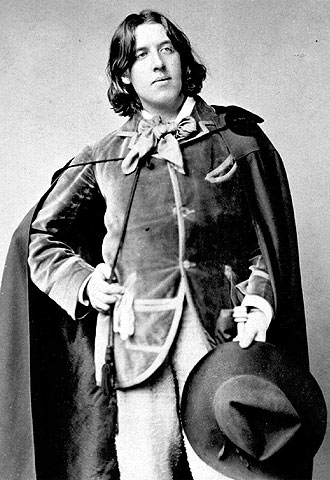
The original dandy.
Oscar Wilde's only novel, written in 1890 in serial form and then extended to be longer. Very controversial in its time (and still today among conservatives) because of its references to homosexuality. They're very blatant and pretty obvious. But still, a very good book. Think of Faust (which I'll explain next), and it's just like that. Morality, sin, all that interesting thought-provoking stuff.

3. Faust

Wilde based the above book on this one. The classic tale of the mad Heinrich (or John) Faust, who sold his soul to the Devil to become smarter. I identify with most of Faust's traits (not the demonic transaction one, though, before you call the priest.) Chris Marlowe wrote Faustus, which is the older version. However, Marlowe's a bit too dry for my tastes. Goethe's version is far more humane and it focuses on whether the powers can be used for other means (lust, power, etc.) instead of just knowledge.

4. The Great Gatsby

Oh, Gatsby...I love this book. The realism. The decor of the 1922 setting that Fitzgerald so expertly wove together in the pages of this masterpiece. The language, the emotion, the setting was as real and moving as if I had lived it. The romance was as complicated as a soap-opera, (a good thing) without all the romantic kiss-slap-what have you that is prevalent in soap operas (an even better thing.) Needless to say, I can't wait for the movie to come out in May. Nothing more to be said, unless you want an endless rave.

5. The Sun Also Rises

The only book I've read by Hemingway, it's also been one of the most tedious. Before all you Hemingway fans come and bash me, let me give my own reasons. I do like certain parts. It's changed my writing style, which is why it's on this list. The language is clipped, terse, and to the point. Out of any book I've read (yes, even you, Numbers 4 and 10) it captures how people talk accurately. Why is it tedious? I don't like the plot. An attractive girl sides with a bunch of guys and they all go watch bullfighting, and she falls in love with the bullfighter, and then the narrator is arguing with her husband, and the bullfighter...just, eh. This may seem childish but it's the truth.

6. Great Expectations

As a 6-year-old, I remember reading the watered-down kids version. Two years ago (wow, it's been that long?) I had a Kobo (warning: NEVER get one, their customer service sucks. Tried getting in contact to return my broken one and they never responded.) Anyways, so I had a Kobo and it came with the book, along with 99 other books. I was able to finish it before the Kobo broke, just 4 months after I bought it. I liked it, enjoyed the realism again. As real as Dickens can get, which is often. For some reason the idea that Ms. Havisham would hire Pip just to play was interesting and awesome to me. Paid for playing. But she was creepy. :) And then I was also fascinated with the meaning of "satis" and Magwitch, and the whole debacle behind that.

7. The Anubis Gates

Good old Scott at Polite Dissent recommended this book in his review for Fringe back in 2010's "White Tulip". I bought it on a whim, and LOVED IT. It isn't nerdy, esoteric sci-fi that you usually find in pulp magazines that only weirdos read. It's brilliant. Time travel at its best. One college professor ends up in 1810, among such literary greats as Byron, Colleridge and William Ashbless. The way Powers can turn the setting so quickly and harrowing is nothing short of genius. I recommend it for anyone who likes how chains of events unfold to create something true.

8. The Maze of Bones

The only children's book on this list, if you know the story behind it, good for you. Suffice it to say that this book got me into a very major part of my Internet and real life. But to be honest, the 39 Clues isn't really that great of a book series. Teenage cynicism, it's sad.

9. The Importance of Being Earnest

I love this play. It's amazing, witty, dramatic and much more. I can quote the play so profoundly. I usually do. "My dear Algy, you talk just as if you were a dentist. It is very vulgar to talk like a dentist when one isn't a dentist. It produces a false impression."

"Well, that is what dentists normally do."


10. The Catcher in the Rye

My all-time FAVORITE book. I read it shortly before I turned 12, at the behest of my mom. I love everything about it. The language (but don't count that against me), the angst, the adventures, the way Holden views the world, just as I do (cynical and curious) and how he makes everything funny. Or sad. It's tragic that he's such a pessimist and a depressed soul. But I sort of imagine Holden in myself (not entirely, but certain aspects.)


So, those are the 10 books that I respect and agree that they have changed my life the most. What's on your list? I'd be interested to see everyone's opinions.

To the next!
-Rob