30 July 2013

Triviality XIV: The Askesian Society

Rob's Note: Shortest Triviality column you'll probably get all year, because I say so. >:D Actually, the subject is interesting but there really isn't a lot about it to discuss. So I'll just lay down the bare facts and you can extrapolate from there, how does that sound? :)

I've also updated some more pages to make them more interesting and comprehensive, so take a look!

Also remember to check out the first Country Facts column on Friday!


So, what was this society? Certainly not like last time's Round Table. They were vicious. These people? They were more insane.

The Askesian Society was a scientific club in London that was around for about 10 years or so, back in the early 1800s. Very short lived. But I'll get to that more later.

That word, "askesian"? It comes from the Greek word askesis which means "training".

This club was officially for "debating" and talking about scientific theories. One member even wrote a book about clouds. Because, you know, people liked talking about clouds back then and thought themselves mighty smart for doing so. (We sort of do that today. Just not about clouds. Unless you're a meteorologist. Or whatever. No offense.)

The founder was a William Allen, a scientist, of course, who let his laboratory be used for the club's benefit, so its members could be used to perform scientific experiments.

However, if Mr. Bill Bryson is to be trusted (and he generally is), the most interesting thing about this little club were their "laughing gas evenings". Yes, it's exactly what it sounds like.

Several evenings the club would get together. Some people would take nitrous oxide (aka N2O, aka laughing gas, aka anesthesia) and stagger around the theatre where the club met. It was hilarious (apparently) and lots of fun, and many members would do it just to get intoxicated by the N2O. They were the original drug takers. *shrugs*

As Bill Bryson puts it in his excellent book A Short History of Nearly Everything, a book you really should read if you like science,

In the early 1800s there arose in England a fashion for inhaling nitrous oxide, or laughing gas, after it was discovered that its use 'was attended by a highly pleasurable thrilling.' For the next half century it would be the drug of choice for young people. One learned body, the Askesian Society, was for a time devoted to little else. Theaters put on 'laughing gas evenings' where volunteers could refresh themselves with a robust inhalation and then entertain the audience with their comical staggerings.

The club was disbanded in 1807 after being around for 11 years. But good news! In 2007 the club was restarted in honor of the 200th anniversary. They still meet in London, and you can pay a fine of seven pounds to talk about science and philosophy. No word yet on laughing gas evenings, though. We can't have everything in life. *shrugs*

-Rob

Click here to go to the last Triviality.

Sources: Wikipedia, A Short History of Nearly Everything by Bill Bryson. The above quote belongs to Bill Bryson from the above named book.

28 July 2013

Book Review: The Count of Monte Cristo

I don't often do reviews, but I had to do this one. It was such an amazing book and I'd like to share my thoughts on it.

Some mild spoilers and plot devices, nothing serious.

The Count of Monte Cristo
by Alexandre Dumas, pere
5/5 stars


"All of human wisdom is summed up in these two words: wait and hope."

Photo Credit: Goodreads

So says the final line of the more-than-1000-page book that I finished reading for a week. But don't let that throw you off. The Count of Monte Cristo is not a boring book at all. It is long. I will say that. If you want a book that you can finish in an hour and call it a day, this book is not for you.

If, however, you want a book that you can take your time on, a book that will keep you wondering about the plot and characters even when you're not reading it, a book that has so many twists and turns to make it exciting and dramatic, then this is the book for you.

For a book revolving around several families, at least 50 different characters, and in a character chart that looks like this, the plot is astonishingly simple. A young sailor, Edmond Dantes, returns home successful from a voyage. Everyone's impressed with him: he's young, handsome, soon to be married to a beautiful girl, and to be promoted captain on his next voyage. Everyone, that is, except two people: his first mate and his fiancee's cousin. They're jealous of him. They're evil. The former wants his position and glory. The latter wants his girl. So they write a letter framing him for siding with Napoleon (this was in 1815) and Edmond is taken away by an unjust procurer and sent to prison for life.

While in prison, Edmond never loses hope. He stays there years and years, and finally, when he plans to starve himself, another prisoner breaks into his cell with some tools. (The original dig-through-your-cell-with-spoons trick.) With the help of this very interesting prisoner, Edmond learns the ways of the world and learns to be a cold, sauve, calculating person who has the power to inflict revenge on those three who made him suffer. This prisoner tells Edmond of a secret treasure hidden on the island of Monte Cristo. Eventually Edmond escapes from prison after fourteen years, and finds the treasure on Monte Cristo. He becomes The Count of Monte Cristo (along with a handful of aliases, the best part) and begins the slow, revengeful plot to wreak havoc.

All of that is just in the first 200 pages. Wow. The rest of the novel does not disappoint, unless you're really sure that you want something to happen and it doesn't. But if you look at the novel through the tragedies Edmond suffered, there really is a lot going for him. And it does turn out satisfying in the end. But be careful. Telling someone you really like this book will say a lot about you. It does for me. It's wickedly evil, delightfully dramatic (they have so many altercations in the Paris Opera it's amazing) and has a lot of allusions. That's another thing.

(I'd recommend you know The Arabian Nights, just the backdrop. Monte Cristo likes his Arabian Nights, and frequently references them without explaining. You might want to look into that. Also into several factors from Roman times. I can't give any names without giving away major plot details, but just try to look up the references as they come to not be confused. And, of course, know Napoleon's time. They do have a lot of hatred, those Royalists and Bonapartists...)

In a book of over 1000 pages, sometimes you might despair. I did twice. "It isn't gonna finish! Oh no! He hasn't done anything!" Yes, it can seem that way many times. But unlike certain books (War and Peace, Les Miserables) the prose is fluid and you can really understand it. But even I read it in degrees. I read roughly 100-300 pages per day, and I took breaks. Unless you're really hooked, read it in pieces. I read maybe 20 pages at a time, then stopped to eat or whatever. Or just stopped to take it in. You WILL be thinking about it often. So yeah. Take it easy and enjoy the ride.

Another thing: Don't get the abridged version. How do you know if it's abridged? It has about 600 pages, and COMPLETELY skips a scandalous affair that is super important, some illegitimate children, attempted killing of a newborn, a drug trip, a lesbian relationship (don't worry, nothing's explicit out of any of these) and a lot more. You could read the abridged version but you'd miss so much and you'll be confused. But for a truly rewarding journey about betrayal, revenge, love, hope, and treachery, read this book in its thousand-page-plus entirety. You'll never be bored.

Click here to buy the book on Amazon. Click here to read it for free on Project Gutenberg (but some people don't like that version. I really don't know about such things, though.)

-Rob

27 July 2013

The North: An Epistolary

[Copied from Robert Miranda's Journal, Sunday]

The Eisenhower Interstate Highway System requires that one mile in every five must be straight, to be usable as airstrips in times of war or other emergencies.

I was thinking about this over and over again while looking out at the pristine Californian coast on the way to Santa Barbara this morning, wondering if there would be any truth to it. I'd known about this little gem for a while already, but, like most everything else that's found on the Internet, there's no way of proving if it was truth. Didn't seem to be true, though. We have a tendency to have very weird freeways. But that's part of the state's charm. [Edit on Tuesday 23rd: Just drove through the PCH. Yeah, it's not true.]

As someone who rarely leaves the Southern California enclave made up of my hometown and the bordering cities I've grown up in and patronized the last 15 years, not 10 minutes from LA's downtown, the fact of seeing towns with less than 10,000 people was disturbing. I have been to Hawai'i twice: it was overpopulated but they were islands. To see towns devoid of people, to see paths empty of cars and any pollution that is a hallmark of Los Angeles - was interesting, and a little disturbing, as I've mentioned. Once one passes Santa Barbara, there is nothing but empty fields, the beginning of wine country.

Welcome to Central California. Population? Looks to be zero.


[Excerpt from Robert Miranda's Phonograph Diary, Monday]

Solvang was extremely interesting. Unfortunately it's really hot and that's a bit annoying. I liked the town, we've been here for, like, about fifteen hours.

There is no nightlife. At all. Not that that's a bad thing, but it's kind of depressing to walk through the streets at dusk and yet there's no one in the streets besides the entourage. There was light still, it's summer, of course, but to see everything closed? Thank goodness we found a restaurant.

It's really quaint. Really. I wouldn't live here, though. I do wish we had gone to a bakery, there's one across the street! But it doesn't look like we're going...Well most everyone's had enough. To the north!


[Excerpt from Robert Miranda's Journal, Monday]

The drive up to Cambria San Simeon was really cool. Enjoyed the view. We didn't get as much sea in the view as we did yesterday. But apparently going up to Monterey we'll get a better view.

There's golf here. We're in a lodge kind of place. Nothing much going on the rest of the day. Everyone's relaxing...I'm going to sit in the patio on the back of our room and read Monte Cristo. There's six chapters left.

[Excerpt from Robert Miranda's Journal, Tuesday]

It's really hard to write in the Hummer, but since I can't talk into my recording device to make a voice journal I'm using this. Hearst Castle was awesome. Alex Trebek was the tour guide! Well he was the voice on the tour bus. AWESOME. But the house was awesome. Very Gothic. I need to look into studying architecture when I get home. Going up to Monterey, should be there in 3 hours.


[Excerpt from Robert Miranda's Phonograph Diary, Wednesday]

It's me again. Where to begin? I was on Cannery Row just now. I can't find my journal anywhere. If I lost it, oh well. I'm going to record my terrible voice for the entire remainder of the journey. It's easier that way. [Edit on Friday: Found in my suitcase.]

Monterey highway...oh, I'm not even going to describe it. It was fun but terrifying at the same time. I don't scare easily but some of those drops...it took an hour to drive eight miles. And I thought that only happened in LA. Then again they were curves.

We drove past Carmel. Bohemian town! Ah, La Boheme...but we're in Pacific Grove so that's slightly depressing. But Monterey's not ten minutes away so we went to the Bay Aquarium (the Aquarium of the Pacific is better, in my opinion.) We went out to Cannery Row where I bought the Steinbeck book, Cannery Row. I bought Cannery Row at Cannery Row! That's awesome! We saw a Steinbeck wax museum which was interesting. And then there was more but I won't go into that.


[Excerpt from a hotel notepad. Thursday]

So far this journey has been great. I wanted to go to Frisco, though, today when we went to San Jose but could not because we have to head home because Sunday my uncle works. Went to the Winchester Mansion and had a weird tour guide. He reminded me of someone...

We toured Seaside and the rest of Monterey, namely the wharf and the marina. We saw seals. To be honest I'm not a fan of nature, one of the reasons I didn't like the beach at San Simeon. Everyone else did. I like the stuff no one else likes. No one liked the Winchester Mansion but me. That shows I'm clearly an eccentric. The Hearst Castle was another perfect example. The Roman pool. But I won't get into that.

[Transcribed from both sides of a business card. Friday]

Going home. Travelled total: 900 miles. Wish it was longer. Can't have everything. -RM
Licence Plates seen: California, Colorado, Oregon, Washington, Nevada, Utah, Arizona, Texas, Oklahoma, Mississippi, Connecticut, Massachusetts, Maine, Ohio, Illinois, Wyoming, and Quebec. No Hawaii.


-Rob

19 July 2013

News Of A Sort

My dear readers, I am dreadfully sorry for being sort of distant. Besides the usual triviality every week, I haven't really discussed much this past month. For that, I am sorry.

To begin, I've been reading. I've read Frankenstein (for the third time, I'm reading it for my Inglishe class now, and yes, Inglishe is spelled that way for me, because Sir Walter Raleigh spelled it that way in a death confession, or something or other.). I've also read Dracula, because I'd never read it before. Very disturbing and very good. An excellent work. And now, I am reading The Count of Monte Cristo by Alexandre Dumas, pere (basically a French title which means "dad" which distinguishes him from his son, another well-known writer.) It's 1055 pages long! And so far, two days and 506 pages in, it does not disappoint, apart from a small boring sojourn entitled "Pyramus and Thisbe", a little chapter that is just too flowery.

So why am I saying all this? Why am I rambling awkwardly about life? Well, readers - I'm going on vacation for the next week, and I am considering writing an epistolary story on the experience. I know I'm bad at posting stories online aside from the odd excerpt every few months or so, but maybe I'll be better at revealing this time.

There may or may not be a Triviality next week - for sure Country Facts will be reserved for its revealing in two weeks, on August 3rd. I'm sorry about that, but the countries I want to start the column off are rather obscure for the Internet and my encyclopedias, sorry. :( As to Triviality, I may write a column tomorrow before leaving, and post it on Tuesday if my laptop gets Internet access.

This is just a heads up. Before I sign off for a week, I put forward this challenge to my readers: a game of sorts. I may continue it, sort of as a points game, we'll see. I will post some song lyrics. The first person to comment with the correct song is the winner of the round, with some 10 points. Anyone else who posts (maybe with a semi-correct answer or something) will get 5 points. Let's see how this goes!

Sing with me, sing for the year, sing for the laughter, sing for my tears...

To the next!
-Rob

16 July 2013

Triviality XIII: The Algonquin Round Table

Greetings from a sunny summer's day! I have finally updated all of the pages on the tab above, so why not click on them and peruse them in peace? I have a new page, too: The Trivia page! It contains links to all of my previous trivialities, and will have a random fact of the day (changed about every midday). -Rob

When looking up witty people, a mention of the Algonquin Round Table is usually quite inevitable. You hear about it usually in conjunction with the 1920s, sometimes on Jeopardy and in books. So what was it?

The Algonquin Round Table (or Vicious Circle, as some of the members called it) was a group of extremely witty intellectuals and writers who got together every day for lunch at the Algonquin Hotel in New York City. For about 10 years, this group of amazing people would get together and just discuss goings on, play games, and do what they did best - be witty and sophisticated.

Caricature of the Round Table.
Photo Credit: PBS

There were about 20 or so people in this circle, but they often left and joined at will so there's really just a rough list. Members include the well-known columnist Dorothy Parker, critic Alexander Woolcott, writer Edna Ferber, actress Tallulah Bankhead, writer Margaret Pulitzer, Marx brother Harpo, New Yorker founder Harold Ross, playwright George Kaufman, columnist Heywood Broun and his wife, Ruth Hale, and writer Robert Benchley. Rarely in history have such amazing and brilliant people come together in a show of brilliance.

So, how did this interesting group of people get together? Ironically - it was all part of a practical joke to welcome back war correspondent Alexander Woolcott, who was away in Europe during World War I. The idea was to welcome him back in a sort of "roast", to make fun at the war and at him in a lighthearted way. All of his writer and journalist friends were invited to the event, which would take place at the Algonquin Hotel.

The event was a success - so successful that those in attendance agreed it should be a "thing" - and thus the Vicious Circle was born, or as Edna Ferber called it, "The Poison Squad". Every day for lunch they would get together and just discuss things that were going on - in society, their jobs, life, anything! Originally they would sit at a long dining table in the middle of the lunch room of the hotel, "the Board", as they called it. (They once had a waiter called Luigi, prompting someone to call them "the Luigi (Ouija) Board."

Dorothy Parker.
Photo Credit: Flickr
But it was hotel manager Frank Cage who got the "Round Table" name for them. He eventually moved them to a private corner with a round table. The "Round Table" was born. And they enjoyed it. The members would each quote each other in their columns. They'd insult and make merciless fun at each other freely. With friends like them, who'd need enemies? They had high standards, high amounts of wit and sarcasm, and high friends. (They were eventually the talk of America during the late '20s.) They'd create word games and have fun at them, including Dorothy Parker's famous line, spoken when asked to use the word horticulture in a sentence,
"You can lead a horticulture, but you can't make her think."
At one point, in 1923, the Round Table created a revue (a sort of play) called No Sirree! The actors and actresses in the group acted, the writers and critics wrote and sang lyrics, and even famous violinist Jascha Heifetz played the violin for the show. Unfortunately it was a failure, but it would represent the only time the group got together to work for a project. It did, however, help launch a Hollywood career for 'Tabler" Robert Benchley.

Harold Ross, EIC.
Photo Credit: Wikipedia
In 1925, Harold Ross, one of the "Circle", decided to open his own magazine, The New Yorker. Today it is one of the most well-known magazines in all of America. The members would enjoy writing for it and quoting it. Today the Algonquin hands out free copies to its guests, in honor of Ross.

By 1927, the group seemed to start falling apart. America's eye was on these brilliant individuals - people would crowd the lunch room of the Algonquin to stare at them, making them uncomfortable and hard-pressed to talk - and some members started leaving. Others found new jobs in other cities, making them leave New York. The Sacco and Vanzetti court case - a very famous murder case that was headlines for a very long time - made Dorothy Parker and others depressed. Eventually, with nothing to discuss and write about, the group disbanded around 1929.

The most ironic thing is that many years after, many members would criticize the group, disparaging it later in life. Many felt that while "serious writers" such as Fitzgerald, Stein, Hemingway and Lardner were writing, they were just wasting time and doing nothing. However, their contributions to literature and wit are considerable. They were truly some of history's best and brightest people, no matter how cutthroat they were.


Click here to see last week's Triviality.

-Rob

Source Material: Flickr article, Algonquin Hotel, PBS, Wikipedia, Round Table

13 July 2013

The Golden Age Belief

I have something to confess, loyal friends and blog-readers. I suffer from a terrible psychological disease. It has haunted me since I discovered the delights and horrors of history, and seldom goes away. In fact, there are some Romantic benefits to this disease, and yet some Realist punishments for having it. (See here for a refresher on those two.) So, what do I have?

Golden Age Belief. (Syndrome)

"Rob, what is that?"
It is the belief that a different era in time is better than your own. In addition, you believe the era was perfect, with no wrongs, fallacies, or corruption. Every kid imagines this in some way - the Medieval Age was better because they could be knights and kings, or the Ancient Romans/Greeks were awesome warriors.

Unfortunately I've taken this a bit too much to heart. That's an understatement.

For the longest time (at least 2 years) I was obsessed with the Victorian age. At the time of creating this blog I was obsessed with Victorians.

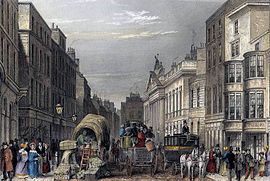
A street in the centre of the empire where the
sun never set.
I thought they were the best age of all. Their conservatism and pride was something that could never be matched again. The fact that they ruled an empire that the sun never set on was just amazing, and enthralling to my mind. The last 3 Halloween costumes I've had were all related to Victorian England/British Empire in some way. (Mad Hatter, Maharajah, Victorian Doctor). I researched everything related to the Victorians, ignoring the fallacies and glorifying the good things. I wanted to be Oscar Wilde or Rudyard Kipling, high-society British gentleman who had traveled the world extensively and would write enthralling adventures. This, of course, is never good. To my mind it was.

But not all things can last. My Anglomanie (obsession with all things British) changed in December, though, with the Moleskine. I didn't realise it till too late. (Not for good, though - I still love a good cup of tea and trying my admittedly horrible British accent!)

Renoir painted this, originally
a Bohemian meant a person
from Bohemia (Czech Rep.)
I was officially obsessed with the Bohemians of Paris in the 1900s. I've discussed that somewhat in my third Triviality, and a bit after that. Living in an age when a bunch of poverty-stricken writers did their best work, now worth millions? Imagine living among these brilliant creators and being inspired by the merest shadow of Imagination, as they were? Since at this point I was seriously considering becoming a writer (I still am) the idea was epic and enthralling. I didn't care about the obvious fallacies (many of them died before 50 by tuberculosis, more often than not) or that many of them were never respected, or that they often OD'd on alcohol and illicit drugs and also died that way, I was captivated by the dramatic lifestyle. Moulin Rouge didn't help (Bohemian wannabes, do NOT watch the movie, lest you be sucked into a portal of never wanting to leave the phase! :D)

But that, too, changed, with the arrival with The Great Gatsby soundtrack in April.

I was listening to the soundtrack, which I downloaded, and while most of the songs are admittedly not even close to sounding like something a big band in the 1920s would sound like, I was obsessed. Who cared about depressing writers dying in a Paris gutter when there were writers in Europe, living the dramatic lifestyle? Admittedly, I had read The Great Gatsby and The Sun Also Rises but I had overlooked those benefits (because I was still goggling at British photographs at the same time.) Immediately, I looked up everything from that day and age.

Times Square has changed quite a bit from 1929, hasn't it?
I wanted to be in the moment. I wanted to go to the giant Gatsby parties with Jordan Baker and sit in a Hammett speakeasy, waiting for Nick and Nora Charles. Upon leaving the place, I'd end in Hemingway Paris and go dancing with Georgette and Lady Ashley Brett. I'd even go to the Faulknerian Deep South with the Compsons and somehow talk with Benjy, and Quentin, and even the scandalous Caddy. Of course, the feeling didn't last, when the Great Gatsby finished I ended up watching silent films. Some were very good (recommend Phantom of the Opera and Safety Last.) But the age had stopped captivating me. The Gatsby parties had stopped, I had seen the 20's for what they really were, corruption and loss of dreams. I didn't want to live then.

This week I have entered the newest phase of this. (Hopefully I'll continue moving forward till I reach my own age, right?) So, where I am "living in"?

The 1950s, of course! Rock'n'roll, quintessential, quiet American suburbs with a typical nuclear family, and science-fiction! (Not to mention the cool old-fashioned adverts.)

But now, I'd like to talk about why I don't like my own day and age.

"Why don't you like 2013?"
I find it very dull. Of course that's because I live in my own bubble. But it's quite true. There's nothing, absolutely nothing, to define our time. Unless it's stuff like Twerking, and Facebook, and boring stuff like that. (Then again, we are some of the first people to not suffer from polio, or TB, or smallpox, or no air-conditioning as the 4 previous eras did.) If the 2100s era people remember us for Dubstep then this was a failed age.

But wait a minute. Weren't the 1920s like that? Isn't the only thing most people care about are the parties, booze, and the Charleston? Hmmm... Maybe this age will be the golden age for someone living in 2085, or 2113. They won't realise the boring parts of it all. Could it be this is all ironic and full-circle?

Make of that what you will. Do you think that this is a "serious problem"? Any advice for helping me live in 2013?

-Rob